FREE Delivery when you spend over £40
 Sign up to our newsletter for exclusive discounts & offers
Treat time should be one of the easy, happy moments in a multi-cat household. But for a lot of owners, it’s actually when the hissing starts. If your cats stare each other down over a sachet of Lick-e-Lix or one cat always seems to end up with the lion’s share, you’re not imagining it, and you’re definitely not alone. In our 2026 survey of UK cat owners, 62% told us they live in a multi-cat household, and treat time is one of the moments where those dynamics show up most clearly.
Part of the reason treats cause so much drama is exactly why cats love them so much in the first place. Their strong smell, exciting texture and link to attention and routine make them genuinely rewarding, which is great news for a single cat, but can turn into competition the moment there’s more than one cat in the room.
The good news is that this is one of the more manageable behaviours in multi-cat life, once you understand why it’s happening.
Do cats really fight over treats?
Yes, cats can fight or become tense over treats. In multi-cat homes, this is often linked to competition over a high-value resource rather than meaning the cats dislike each other. It can show up as staring, blocking, rushing towards the treats or one cat hanging back while another takes the lead. In many cases, small changes to how and where treats are given can help reduce the tension.
Why treat time may trigger conflict in multi-cat homes
Competition over a valuable resource
Cats have individual resource needs and can experience stress when important resources are concentrated in one place or when access is controlled by another cat.
Treats can become particularly valuable resources because they’re often strongly scented, highly rewarding and given as part of an enjoyable routine. They may be offered by hand too, which can bring several cats into the same small space at once. That can make competition more obvious, even when there is technically enough food to go around. That can explain why a cat who happily shares a sofa with their housemate may suddenly become tense when treats appear.
Hierarchy and confidence differences between cats
Cats living together often settle into an informal hierarchy, usually based on confidence rather than size or age. A more assertive cat may position themselves closer to you, approach first, or subtly block a shyer housemate from getting near. This isn’t necessarily aggression. It can be as quiet as one cat sitting in a doorway or holding eye contact until the other backs off. Prolonged staring is actually one of the things cats tend to find most confrontational.
If you have a more nervous or lower-confident cat, they may hang back at treat time even when there’s no real threat, simply because they’ve learned it’s not worth the confrontation. Over time, this can mean one cat consistently misses out, which is worth watching for.
How can you tell if treat time is becoming a problem?
Treat time may be becoming a problem if one cat regularly blocks another from getting a treat, stares them down, rushes them away, steals their portion, or makes them hang back or leave. Hissing, swatting and chasing are clearer signs that the tension has escalated.
Look out for:
- One cat consistently getting access first
- One cat hanging back or leaving
- Staring or blocking
- Rushing another cat away
- Treat stealing
- Hissing, swatting or chasing
How do you stop cats fighting over treats?
Separate feeding spaces (the N+1 principle)
Give each cat their own space for treats, ideally out of sight of each other. This doesn’t need to be complicated. Opposite ends of the kitchen, different rooms, or one cat on a raised surface and one on the floor can be enough to remove the competition entirely.
International Cat Care recommends the “N+1 rule” for multi-cat households. The N+1 principle means providing one important resource per cat, plus one extra, and spreading those resources around the home. For two cats, that means three litter trays, for example. For treat time, the more useful takeaway is to give each cat enough space to eat without being watched, blocked or rushed by another cat.
Give each cat their own portion
You don’t need to give every cat exactly the same treat. What’s important is that each cat gets an appropriate portion for their individual needs and can eat it without competition.
Avoid doorways and bottlenecks
A narrow hallway, doorway or corner can make competition worse because a cat has fewer options to move away.
This matters beyond treat time too. Cats Protection recommends positioning important resources in different areas of the home so one cat cannot easily block another’s access.
Reward calm coexistence, not just manage conflict
It’s easy to only think about treats as something to manage during tension. But they’re just as useful for reinforcing the behaviour you actually want. If your cats are near each other with no stress, a calm treat for both is a simple way to build a positive association between them.
The same idea carries through mealtimes generally, not just treats. Our Cat Lover’s Guide to Stress-Free Mealtimes has more on keeping the whole feeding routine calm in a multi-cat home.
If a fight breaks out, never intervene by hand
If your cats are fighting, don’t put your hands between them or try to pick either cat up. Give them space to separate and use a physical barrier, such as a large piece of cardboard or a cushion, if you need to prevent further contact. Once they’re separated, allow both cats time to calm down before trying to reunite them. If fights are frequent or injuries occur, speak to your vet or a qualified behaviourist.
Introducing a new cat? How to use treats to build a positive first impression
Treat time isn’t just useful for cats who already live together. It’s also one of the simplest tools for helping a new cat and your resident cat form a positive association with each other before they’ve properly met.
- Keep them separated at first, with the new cat settled in their own room complete with food, water, litter and a hiding spot.
- Give treats on opposite sides of the closed door, at the same time each day, so both cats start linking the sound and scent of each other with something good happening.
- Progress to a cracked door or baby gate once both cats are eating calmly, continuing to treat them together through the gap.
- Don’t rush and let them set the pace. There isn’t a fixed timetable. Some cats progress quickly, while others need much longer. The important thing is to move forward only when both cats are comfortable and to go back a step if either cat becomes stressed.
Can individual portions make treat time easier?
Giving each cat their own portion removes one simple source of competition: having to access the same treat or bowl as another cat.
This is one of the reasons creamy, lickable treats like Webbox Lick-e-Lix work well for multi-cat households because they can be offered individually, making them an option for calm, one-to-one treat interactions rather than placing treats in a shared bowl.
They’re not a magic fix on their own, but paired with separate spaces and calm timing, they take one easy trigger off the table.
When to speak to a vet or behaviourist
Some treat-time tension can improve with simple changes to how resources are managed. But it’s worth speaking to your vet if:
- The guarding started suddenly, especially in an older cat. A sudden change in behaviour is worth discussing with your vet. Pain, illness or other health problems can sometimes contribute to changes in behaviour or appetite.
- Tension is ongoing or escalating, rather than the occasional squabble. Cats living in constant low-level conflict can experience real stress, so it’s not something to leave unaddressed indefinitely.
- A fight has caused injury, even a minor scratch or bite. Cat bites can look small on the surface but carry a real infection risk, so it’s worth getting checked over.
- Nothing seems to be helping, despite separating resources and managing treat time carefully. A referral to a qualified clinical animal behaviourist can help identify what’s really driving the conflict and build a proper plan around it.
There’s no quick fix for cat conflict, and that’s worth saying honestly. Some cats settle into an easy friendship, others learn to peacefully tolerate each other without ever being close, and both are perfectly normal outcomes.
Frequently Asked Questions
Yes, and it’s more common than most owners expect. It’s rarely about the cats disliking each other, it’s just instinct kicking in over something exciting. Competition is more likely to become a problem when several cats have to access treats from the same small area. Giving each cat their own space and portion can help reduce tension.
Give the cats their treats separately, either in different areas of the same room or in different rooms. Stay nearby until both cats have finished if one regularly tries to steal from the other.
What looks like bullying can involve competition over access to important resources. Staring, blocking routes and preventing another cat from reaching food are recognised signs of tension in multi-cat households. Spreading resources around the home can help reduce competition.
Treats can help create positive associations when cats are introduced gradually, but they should not be used to force cats to interact. Give treats while cats are calm and comfortably separated, then gradually reduce the distance as they become more relaxed.
Introduce cats gradually. Start with separate spaces, swap scents, then move to controlled visual contact before attempting face-to-face interaction. Give both cats opportunities to retreat and progress only when they are comfortable.






Related Articles
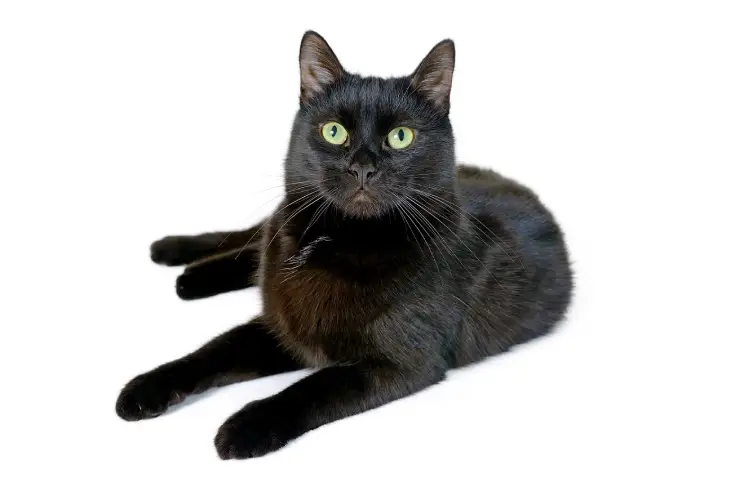
5 Pawsitively fascinating facts about black cats
Most commonly associated with Halloween, witchcraft and superstition, black cats have undoubtedly gained a bad rep over the years- despite being just as loveable as their more colourful cousins! With National Black Cat Day just around the corner, we decided to share some spell-binding facts about our feline friends. Facts about black cats 1. Black […]

How to Keep Your Pet Calm & Relaxed on Bonfire Night
Bonfire Night may be a fun time for us humans, but it can also be a stressful evening for our furry friends. As cats and dogs can both hear from far distances and can pick up high-frequency sounds, the sounds of loud fireworks will be incredibly distressing for them. That’s why you must take precautionary […]

Festive Pet Quiz: What’s your pet’s Christmas personality?
The Christmas season is in full swing, and as you deck the halls, hang your ornaments, and trim the tree, you may notice your furry friend getting into the holiday spirit too. From the mischievous tinsel-loving troublemaker to the cosy, content Christmas companion, every pet has its unique seasonal personality. Whether they’re causing a little […]

Shop for Dogs

Personalise your search:

Shop for Cats

Personalise your search:
Our Most Popular


Price range: £3.37 through £25.20
View Product
Price range: £0.85 through £10.20
View Product
Price range: £7.55 through £37.75
View Product
Price range: £2.75 through £19.99
View Product

Price range: £2.15 through £14.05
View Product


Price range: £0.75 through £8.25
View Product











Price range: £1.60 through £27.20
View Product