FREE Delivery when you spend over £40
 Sign up to our newsletter for exclusive discounts & offers
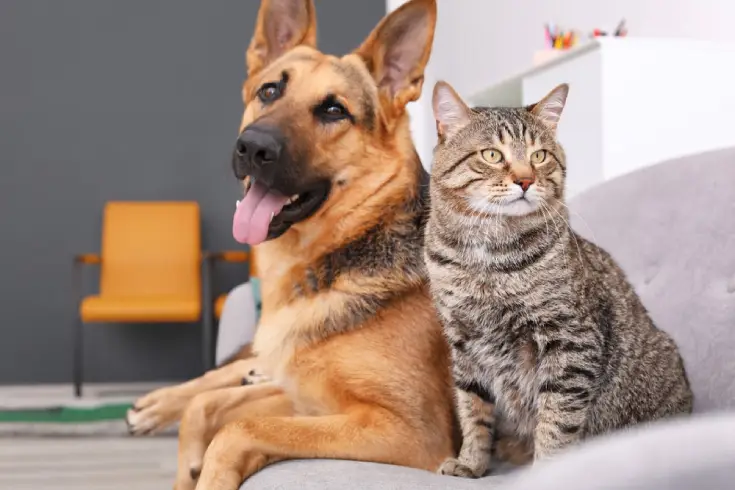
Cats and dogs are usually painted as complete opposites. People believe they have contrasting personalities that don’t coexist. That can make life difficult for people who love both animals and want to keep both as pets. But with the right approach, cats and dogs can live together happily in UK households. These tips will help your cat and dog form a strong bond, reduce aggression and thrive together.
Plan their first meeting carefully
First impressions are as important in the animal world as they are in the human world. And like in the human world, you only make one first impression. So you need to make sure your dog and cat’s first meeting is a great one. And what better way to build a bond than with food?
- First, let your pets smell each other’s bedding and toys before meeting.
-
Schedule the first interaction during mealtime, keeping dogs and cats separated by a dog gate or screen.
-
Gradually move feeding closer while maintaining safety.
-
Once both are comfortable, remove the barrier carefully.
-
If your dog is excitable, use a leash during the first few interactions.
Bear their personalities in mind
The general stereotypes of cats and dogs are that cats are aloof and independent, while dogs are loving and friendly. That’s not always true, with many different dogs and cats having their own personality and quirks. This is why you should always take your pet’s personality into account when bringing another animal into the house. For example, a particularly boisterous dog wouldn’t do well living with a very skittish and nervous cat. You should always remember how your dog or cat behaves when deciding to bring their furry opposite into the fold. Matching personalities ensures a smoother integration and reduces stress for both pets.
If you want to learn more about the amusing and heartwarming behaviours cats display, check out our survey on the cat behaviours that make owners laugh and melt. Matching personalities ensures a smoother integration and reduces stress for both pets.
Keep their food and toys separate
Animals, including dogs and cats, are very protective of their food. That’s why it’s essential that you keep your dog and cat foods separate. If your cat decides they want to take a nibble out of the dog’s dinner, or vice versa, it can lead to a lot of aggression. So, after the initial few weeks of eating near each other, you should make sure to feed your dog and cat at regular meal times in different areas of the house. You could try leaving your cat’s bowl in a high spot (i.e. a table, the kitchen desktop) so that your dog can’t reach it. We also recommend keeping your pet’s toys separate from each other. Competition over toys can lead to aggression and fighting. That’s why it’s better to keep them completely separate.
Keep your dog’s body and mind stimulated
Dogs always need exercise and stimulation. They’re active creatures who get bored and restless easily. If they’re not getting enough exercise or have anything to keep themselves busy, they’re going to find themselves something to do. This can lead to them bothering the cat and this can lead to friction between the two. To avoid situations like this, make sure you are giving your dog a regular amount of exercise they need. Also, look for different ways to exercise your dog, both mentally and physically. This can range from exercise courses to new-trick training, puzzle or games.
Give your cat their own space
Even though the stereotype of cats being loners isn’t always true, they do like to be independent and have their own space. That’s why it’s important that your cat has a safe haven from the rest of the house to feel comfortable in. With this in mind, it’s also important to remember that dogs are never mindful of ‘personal space’. This is fine for humans, but cats… not so much. So make sure your dog can’t get into the cat’s personal space. An effective way to do this would be to set up your cat’s space in a high spot. Cats are natural vertical climbers, and this will ensure the dog can’t reach their space. Also, your cat will feel safe being able to observe the dog from a secure, high position.
Use Interactive Toys to Encourage Play and Bonding
Shared play can strengthen the cat-dog relationship:
- Use interactive toys that both can enjoy separately.
- Puzzle toys, fetch games, and catnip toys keep pets mentally stimulated.
FAQs
Initial adjustments can take weeks, depending on their personalities. Gradual exposure and safe interactions are key.
Keep food and toys separate, ensure mental and physical stimulation for both pets, and provide safe zones for your cat.
Chasing is often caused by excitement, curiosity or a strong prey instinct. Try keeping your dog on a leash during early interactions and reward calm behaviour around the cat. Giving your dog plenty of exercise and mental stimulation can also reduce the urge to chase.
Some breeds are known for being more relaxed around smaller animals, like Labradors and Golden Retrievers, but personality and training matter more than breed alone. Even dogs with strong prey drives can sometimes learn to coexist with cats when introduced properly.
Positive signs include calm behaviour around each other, relaxed body language, ignoring each other comfortably, or even sleeping in the same room. Some pets eventually play together or groom each other, but simply coexisting peacefully is already a success.

Recent News




Related Articles
Can Dogs Eat Pumpkin? The Autumn Superfood Explained (Plus Fun Ways to Serve It)
Pumpkins are everywhere in autumn, and it’s not just for carving. If you’ve wondered whether your dog can safely eat it, the short answer is yes. Plain, cooked or canned pumpkin is safe for most dogs and can genuinely support their health, thanks to its fibre content and a useful dose of vitamins A, C […]
Why Do Cats Eat Grass? Benefits, Safety & Growing Cat Grass at Home
If you’ve ever caught your cat chewing on a blade of grass, then bringing it back up minutes later, you’re not alone, and you’re not doing anything wrong. Grass-eating is one of the most common (and most misunderstood) feline behaviours, and it’s completely normal for cats of every age and lifestyle. Cats eat grass out […]
Which Dog Breeds Are the Clingiest? 6 Affectionate Breeds That Love Being By Your Side
Some dogs are perfectly happy snoozing in another room. Others seem to have made it their life’s mission to follow you everywhere – from the kitchen to the sofa and even to the bathroom. But which breeds are most likely to be your four-legged shadow? Our 2026 Webbox survey of 171 dog owners asked about […]

Shop for Dogs

Personalise your search:

Shop for Cats

Personalise your search:
Our Most Popular


Price range: £3.75 through £28.00
View Product
Price range: £0.85 through £10.20
View Product
Price range: £7.55 through £37.75
View Product
Price range: £3.00 through £21.00
View Product

Price range: £2.15 through £15.00
View Product


Price range: £0.75 through £8.25
View Product











Price range: £1.60 through £27.20
View Product